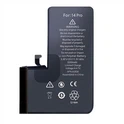
1. From the original point of view of the work of lithium ion batteries, it is impossible to charge while discharging. ① When a lithium ion battery is charged, the lithium atoms on the positive electrode material are "deintercalated" and decomposed into lithium ions and electrons. Lithium ions pass through the electrolyte to the negative electrode, and electrons pass through the external circuit to the negative electrode. Lithium ions and electrons become atoms "inserted" on the negative electrode material, completing the charging process. ② When a lithium ion battery is discharged, the lithium atoms on the negative electrode material are "deintercalated" and decomposed into lithium ions and electrons. Lithium ions pass through the electrolyte to the positive electrode, and electrons pass through the external circuit to the positive electrode. Lithium ions and electrons become atoms "embedded" on the positive electrode material, completing the discharge process. Simply put, the charging and discharging process is a one-way chemical reaction, so it is impossible to charge and discharge at the same time.
2. In terms of use, a lithium-ion battery can be regarded as an "electrical appliance", and its positive and negative electrodes are both the input terminal during charging and the output terminal during discharging. When you connect the power supply to the positive and negative poles of the lithium-ion battery for charging, at the same time connect a "bulb" to the positive and negative poles of the lithium-ion battery to discharge. This is similar to connecting two "loads" in parallel on a power supply, because it is connected in parallel, and the voltage of the charging power supply is generally higher than that of the battery. ①When the power is turned on, the high-voltage power supply will charge the low-voltage lithium-ion battery, and at the same time, it will also supply power to the "bulb" connected to the positive and negative poles of the lithium-ion battery. (Lithium-ion battery voltage will not get higher and higher, limited by its voltage platform, charging until the cut-off voltage, circuit protection, will stop charging, then the power supply only powers the "bulb") ②When the power supply is turned off At this time, only the lithium-ion battery in the circuit supplies power to the "bulb", in other words the battery is discharging. (The voltage of the lithium-ion battery will not be as low as zero, and the circuit protection will stop the discharge until the battery's cut-off voltage is discharged, and the power supply in the circuit will stop at this time)
3. It is similar to the second point in the case of using a mobile phone while charging. It can be understood this way: when charging, the power is supplied by the hardware of the mobile phone, and the lithium-ion battery is also being charged at the same time. Rather than the lithium-ion battery in the mobile phone, it is not only supplying power (discharging) to the hardware, but also receiving charging from the power source at the same time.