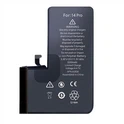
Nowadays, our lives are inseparable from smart phones. This small machine has almost covered all the functions we need in our daily lives, not just making calls and sending text messages. Today's mobile phones have replaced some of the functions of computers, TVs, and cameras to some extent, and the functions that belong to mobile phones are constantly increasing.
People living in cities may wish to recall, how long have you not used cash? Nowadays, whether it is in large shopping malls or roadside stalls, you can use mobile phones to pay. We need to bring less and less things to go out. Sometimes only a mobile phone can cope with most situations.
The development of smart phones makes people more and more "lazy", unwilling to take those heavy things out of the house, such as power banks. As a result, shared power banks have quietly emerged, and shared power banks can now be seen on the streets and alleys. After all, for a modern person, a dead cell phone is equivalent to "disconnected" from society, even in a lively crowd. It is the same as "losing connection", it can be said that it is difficult to move an inch.
So, do you really know everything about your cell phone battery? When choosing a mobile phone, we often pay special attention to the camera, chip and other hardware of the mobile phone, but the battery of the mobile phone is like the tire of a car. Without it, we cannot move forward.
Batteries everywhere
Batteries are something we are all familiar with. The most common batteries in our lives are probably primary batteries and secondary batteries.
The primary battery is also called the primary battery, and it loses its function after the power is used up. Our common remote control battery is such a battery; the secondary battery is also called the rechargeable battery, which has quite a variety of types, but the common point is that it can be used multiple times In use, it can be recharged after the power is exhausted. Our mobile phone battery is a secondary battery.
At present, the world's secondary batteries mainly include lithium ion batteries, nickel-cadmium batteries, and nickel-hydrogen batteries. Our mobile phone batteries now mainly use lithium batteries.
In addition to these two more common battery classifications, there are also methods to classify batteries by electrolyte type, which are mainly divided into three types: acid batteries, alkaline batteries and organic electrolyte batteries.
Why we need to recycle the used batteries separately is because they contain some heavy metal substances. Once they enter the land and water sources, they will have a huge impact on the environment.
However, most single-use dry batteries nowadays have no heavy metal leakage, so they are not considered hazardous waste. However, the lithium battery on our mobile phone is still a kind of harmful garbage. So, what is the design of the battery of the mobile phone?
Changes in mobile phone batteries
The invention of the mobile phone is only a few decades, but the smart phones we use now are completely different from the mobile phones in the past. When mobile phones first entered China, they were called "Big Brothers". Not only were they extremely expensive, they also looked like a "brick". However, in those days, such mobile phones were already a symbol of identity and status.
Later, the size of the mobile phone gradually became smaller and its functions gradually increased, eventually replacing other communication tools such as BB machines. The emergence of color display mobile phones is a major breakthrough in mobile phone technology, and the camera function allows mobile phones to slowly begin to develop in the direction of all-round electronic products.
The emergence of smart phones is absolutely epoch-making in the history of human electronic products. It has made the global mobile phone industry a "big reshuffle". As long as it is a mobile phone that cannot adapt to the changes of the times, even a big brand like Nokia will not. Can avoid going to the end.
With the continuous increase of mobile phone functions, the requirements for the capacity and life of mobile phone batteries are getting higher and higher. After all, a battery that will run out of electricity at any time will undoubtedly make the overall sense of use of the mobile phone greatly compromised. At the same time, the charging frequency of mobile phone batteries is also increasing as people use their mobile phones longer, which poses new challenges to the battery life.
How should we charge the mobile phone?
In addition to the performance of the mobile phone itself, the way the user uses it in daily life is also a key factor in determining the lifespan of the mobile phone. The mobile phone is a sophisticated electronic product. If we are not careful when using it, the mobile phone is also very easy to damage.
Take our charging as an example. There are also many particularities in this daily behavior. For example, should we charge our mobile phone when there is still battery power? Should it be fully charged when charging? The answers to these questions on the Internet can be said to be strange. Let us start with the classification of mobile phone batteries.
In some mobile phones in the past, the rechargeable battery we used was a nickel battery. The characteristic of this battery is "full charge", which means that the battery needs to be completely used up before recharging, because it has For the "memory function", if you start charging when 20% of the battery is left, then you can only "remember" 80% of the battery. Are reduced.
Therefore, when using nickel batteries, we need to wait until the battery is completely exhausted before recharging, and each charge needs to be fully charged to ensure battery performance.
Because of the characteristics of nickel batteries, they are gradually eliminated by the times. Today's smartphone batteries are all lithium batteries. The characteristic of this type of battery is "charge and discharge", which means you can use as much electricity as you want. Charging will not reduce the battery capacity due to the memory function.
However, we should also note that lithium batteries are different from nickel batteries. It is not recommended to wait until the power in the battery is completely exhausted before charging, which will reduce the life of the lithium battery. Generally speaking, lithium batteries can be properly charged when the power is less than 50%, and it is best not to wait for less than 20% to recharge.
Other precautions for using the battery
After talking about the extent to which the battery should be recharged, let’s discuss the extent to which the battery should be recharged. Some people have a bit of "obsessive-compulsive disorder" for the battery of their mobile phones, and they must continue to connect to the charging cable even after they are fully charged. So will this cause any damage to the phone?
In fact, we don't need to worry about this problem, because most smart phones now have automatic power-off protection. When the phone is fully charged, the battery will stop charging and wait until the next battery is used, and then start charging again. But even so, it is not recommended to charge the phone on the bed at night, because the hardware of the phone is likely to generate heat.
So, can we play mobile phones while charging? Theoretically speaking, the operating safety of the mobile phone itself has nothing to do with whether the battery is charged or not, but we need to pay attention to that the charging of the battery has a certain relationship with the temperature. The best charging temperature for lithium batteries is between 16 and 22 degrees Celsius, if it is too low Or it is too high to have an adverse effect on the life of the battery.
When playing with a mobile phone, it will cause the hardware of the mobile phone to heat up, which will affect the charging status of the battery. Therefore, if it is not necessary when we charge the mobile phone, it is better not to use the mobile phone frequently.
When should we replace the mobile phone battery?
The mobile phone battery of a smartphone is generally integrated with the mobile phone itself, and it is impossible to directly take out the battery for replacement as in the past mobile phones. So, how should we judge whether our mobile phone should replace the battery?
Generally speaking, the battery life of a mobile phone is about the same as the life expectancy of the mobile phone itself at the time of design, but after all, we will encounter various situations in our lives, and there is no guarantee that the mobile phone will always be charged in the best state, so It is also normal for the battery life of mobile phones to decrease.
If you find that the standby time of your mobile phone is greatly reduced, even if it shows full charge, or the mobile phone cannot be charged, then you should replace the battery.
It is especially important to note that the current mobile phone structure is more sophisticated. If we are not professionals and do not have professional tools, it is best not to replace the battery of the mobile phone at home. This may cause the mobile phone to be broken.
Therefore, when we discover any problem with the mobile phone, it is best to seek help from a professional, preferably the repair department designated by the mobile phone manufacturer, so that we can effectively increase the life of our mobile phone and reduce the incidence of failure. On the one hand, it is to save money, and on the other hand, it is to avoid bringing too much trouble to one's own life.
Concluding remarks
Nowadays, no matter if you are an old man or a child, it seems that you can't do without a mobile phone. Smart phones do bring a lot of convenience to our lives, but we can't be too addicted to it, no matter what, we rely on mobile phones.
In this increasingly fast-developing information age, our lives are increasingly lacking in "realism". Although we do live in this real world, we rely too much on the virtual world. Mental health is unfavorable.
We should look more at the world within our reach, cherish every minute of the moment, and spend more time with family, friends, and lovers.
The material life of modern people is becoming more and more abundant, but our spirit is disturbed by too much information. Living in each "information cocoon", both the way of thinking and the knowledge are more fragmented.
We should not be too addicted to the fast-food information input brought by modern technology. We should read more classic books, listen to favorite music, spend two hours seriously watching a movie, or just go out for bike rides and walks. An afternoon is very beneficial to our body and mind, and it can also relieve the pressure brought by the fast-paced city life.