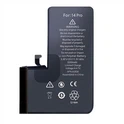
The battery voltage of the mobile phone generally does not exceed 4.2V
The rated voltage of the mobile phone battery is 3.7V, the full voltage is 4.2V, and the limited charging voltage is 5.0V. Today's mobile phones generally use lithium-ion batteries. Lithium-ion battery voltage is generally 3.6V or 3.7V, the battery voltage range is 2.75V-4.2V. As the power consumption voltage gradually decreases, the general battery has a protection circuit. If the voltage is lower than 2.75V, the circuit will cut off the external power supply, and the battery must be charged at this time. If the voltage exceeds 4.2V during charging, the power supply will automatically power off. If you continue to use it when the voltage is lower than 2.75V, the battery capacity will be reduced, the battery life will be reduced, and overcharging will also reduce the life. And the battery will bulge, the range of deformation current, the charging current is usually below 15% of the battery capacity.
The voltage of the mobile phone battery should generally not exceed 4.2V when charging. In principle, it cannot exceed this voltage. However, different brands of mobile phone batteries have different design parameters, and the voltage may vary, but usually it cannot be too high. If the battery voltage displayed on the mobile phone is too high, it means that the power management module is faulty, the charging voltage is too high, and the battery contacts are in poor contact. Please take measures after investigating the cause. Lithium-ion batteries have no memory and can be charged anytime, anywhere. Usually, they can be fully charged in two or three hours. There will be better protection circuits in such batteries.