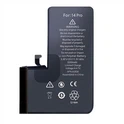
Mobile phones and tablets these days come with different types of batteries and it is their quality that decides how much energy they can store and hence how long the device can be operated with a single charge.
There are also limitations on size and weight as a big battery would make the device heavy and bulky, which is not a comfortable option. So, designers work on basically three parameters of a battery – chemical composition, size, and weight.
In terms of chemical composition, there are only two types of batteries used in modern cell phones Lithium Polymer and Lithium Ion.
Lithium Polymer (Li-Poly) Batteries
Li-Poly is the latest and most advanced technology for cell phone batteries. This makes the batteries ultra-lightweight, they do not suffer from memory effect and will deliver up to 40 per cent more battery capacity than a Nickel Metal Hybrid (NiMH) (one that you use in your camera) of the same size.

“Memory effect” happens when rechargeable batteries are not fully discharged between charge cycles; as a result the battery “remembers” the shortened cycle and is thus reduces its capacity. Devices like Blackberry PlayBook, Samsung Galaxy S3 use this type of battery.
Lithium Ion (Li-Ion) Batteries
This is the older and most popular technology for cell phone batteries. The only real drawback of Lithium Ion cell phone batteries is that they are expensive. However, they have higher energy density compared to Li-Polymer.
Both Li-ion and Li Polymer batteries have the same chemical composition but the difference lies in their tendency to overheat. Because of this, Lithium Ion batteries have an active protection circuit–essentially an onboard computer–that prevents the battery from overheating and potentially bursting into flame.
Lithium polymer batteries do not need the active protection circuit, which is why it is possible to manufacture them in sizes as small as a credit card.