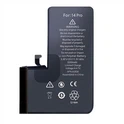
Academically speaking, lithium batteries refer to batteries with lithium metal for the negative electrode, such as Li-TiS2 and Li-MoS2 batteries that were commercialized before the 1990s. Because metal lithium gradually produces branch crystals during operation, it is easy to short-circuit and explode. Production was discontinued after several safety incidents. After the 1990s, Sony formula took the lead in commercializing lithium-ion batteries that use graphite instead of lithium metal as the negative electrode. During the charging and discharging process, lithium ions migrate back and forth between the positive electrode and the negative electrode, and the lithium ions are not reduced to zero during the entire process. Metal lithium in the valence state is therefore called a lithium ion battery. The safety of lithium ion batteries is much better. In life, they are generally not strictly distinguished. They are all called lithium batteries, but in fact, all lithium ion batteries are seen on the market. For example, the battery in a mobile phone is an academic lithium-ion battery
Dec 18, 2019
Is there a difference between lithium ion battery and lithium battery? What kind of battery is a mobile phone battery?
Previous
Send Inquiry
Product Categories